

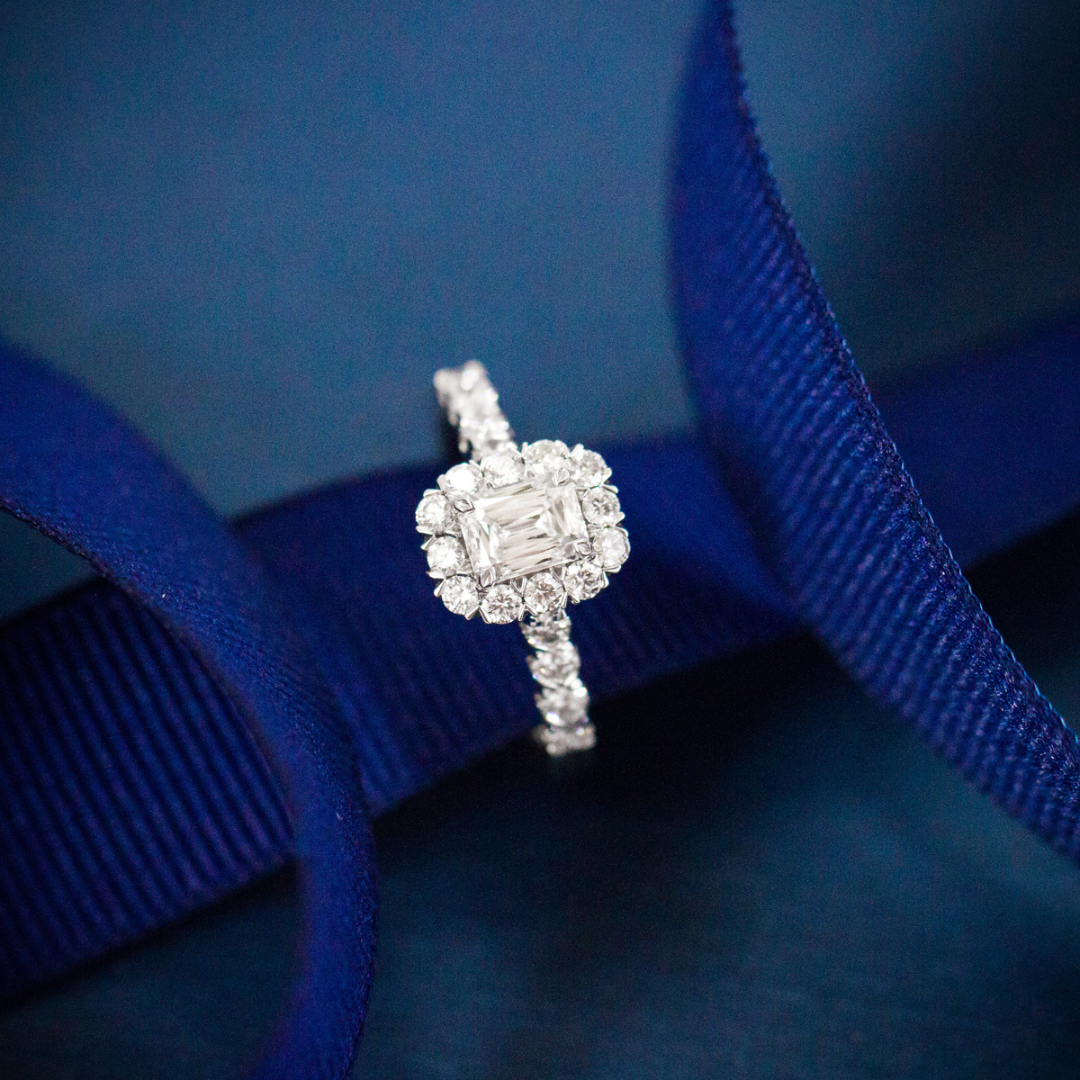
So, you’ve found the one and you’ve decided to make the leap and start the search for the perfect engagement ring. You usually start with the center stone, in most cases, a diamond: it’s shape, size, clarity, cut- all the things that make up the wonderful world of the four C’s. What most do not consider is the setting, and although a common mistake, the setting is just as important as the diamond itself, since it is the setting that quite literally sets the stage for the center stone.
If you’ve not already discovered, the setting refers to how the diamonds are mounted or set into the metal band. The setting is comprised of two parts: the head and shank, another name for the band. Even though the stone makes up the majority of the cost, the setting will be what defines the style of the ring and can complement or contradict the gem’s best assets.
Keep reading to know what to look for when choosing the perfect engagement ring setting for your future spouse.

Popular Settings
Choosing the perfect setting isn’t just about how it looks on the finger. Although a huge part of it, one should also take lifestyle and budget into consideration. The prong setting is the most popular because of the way the four to six prongs elevate the center stone off the band, allowing more light to enter from all angles and causing the diamond to look bigger and more brilliant. That being said, it is highly prone to catching on clothing, hair, car doors – you name it. Consider that prongs use less metal to make up the band and therefore, less cost is involved. You will need to compare the cost of the ring and any potential costs that may arise from damage to the ring, say, if your soon-to-be spouse works a lot with their hands.
If you love the idea of prongs, but want something a bit more secure, consider the basket setting. Aided by cross-hatching detail to create a cradle for the center stone, this allows it to sit high off the band, but can sometimes obscure its light and beauty. Cathedral settings, named for their likeness to the arches of a cathedral ceiling, make a dramatic statement while the trellis setting, with its crisscross of metal bars to hold the diamond aloft, is a timeless choice.
If you know the wearer of your ring needs a lower profile setting because of lifestyle, consider the bezel setting. Held in place by a thin metal casing, the center stone is at its most secure, with added durability for a sleek and modern look. If your partner is all about dramatic presentation, consider the tension setting, where the diamond is held in place by the tension in between the two ends of the band, giving the appearance that the diamond is floating in midair. The biggest downside to tension settings is that because the center stone makes up the middle, these rings have to be custom made for an exact fit to the finger.
Popular Designs for Settings
Along with how the stone is “held” on the band, are a plethora of ways to add extra sparkle and flair to an engagement ring, without breaking the bank on a large stone. If optimal sparkle is the goal, opt for the pavé setting, The French word for “paved”, the idea is that the band is quite literally paved in smaller diamonds. If you’re the sentimental type, consider a three-stone setting, where the past, present, and future of your love is represented.
The wonderful thing about settings is that there are so many options to consider, but don’t let that overwhelm you. Instead, know you are sure to find one that suits each of your specific needs.
Visit Sylvan’s Jewelers in Downtown Columbia to explore our wide selection of diamond engagement rings! We would be happy to help you find the perfect piece for you and your significant other!
